
Hearing Support Additionally Resourced Provision
Welcome to our Hearing Support ARP!
We provide inclusive education for up to ten deaf pupils within the HS-ARP from Reception to Year 6. These pupils may also have a range of additional needs. We have a ‘Total Communication Approach’ which means we use British Sign Language (BSL), Signed Supported English (SSE) and spoken English, dependent on the needs of each individual pupil. We also use a range of gestures and visual resources to aid communication.
Our aim is that all deaf pupils are fully included in both the academic and social life of the school. Our ARP pupils have equal access to a broad curriculum and learn alongside their peers with in-class support or small/individual group sessions, depending upon their needs. This specialised support, which is specified in each Education Health Care Plan (EHCP) is agreed and planned as a result of close working relationships with class teachers and the Teacher of the Deaf, and can be delivered in-class or in a small group setting within the HS-ARP. Our ARP classroom is acoustically treated with a specialist ceiling to reduce reverberation and excess noise.
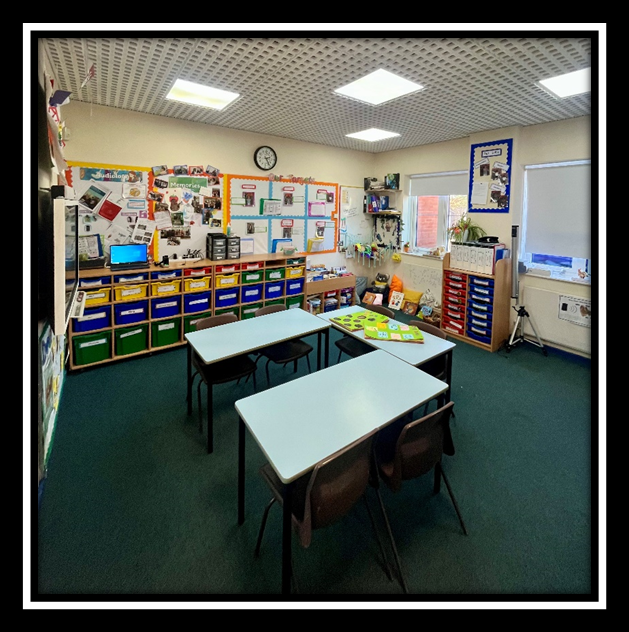
Our HS-ARP classroom, which is simply known as ‘ARP’
Listening Environments and Technology
In order to achieve the optimum listening environment, all of our classrooms adapt to minimise reverberation and resonance (including carpets and blinds) and are fitted with digital soundfield systems (surround sound amplification). This helps all the pupils in class hear the speaker more clearly. All of our deaf learners have access to a Radio Aid System that allows their personal hearing devices to connect to the soundfield system, which in turn can be connected to any media output such as laptops when videos are played.
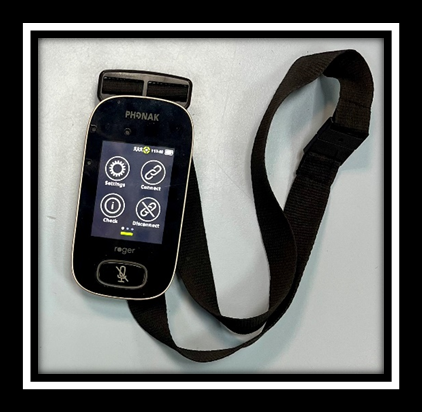 An example of a touchscreen microphone used at SMCS.
We fully support pupils with a wide range of audiological equipment and work closely with the local audiology departments and Cochlear Implant centres. Correct use and maintenance of all hearing equipment is central to our practice, as is the use of techniques to support pupils in developing good spoken language and communication skills. If there are any concerns regarding the pupil’s equipment, staff will inform parents and contact the relevant specialists if appropriate.
Each pupil has a daily morning check to test if their equipment is working. Other checks are made throughout the day as needed. Their devices are then connected to the radio aid system and further checks are made to see if the listening environment is optimum for them. Pupils are continuously encouraged to be independent with their equipment and are taught how to tell an adult if there is a problem, such as a flat battery or a muted microphone. As they progress through school, they are also encouraged and supported to carry out basic troubleshooting themselves.
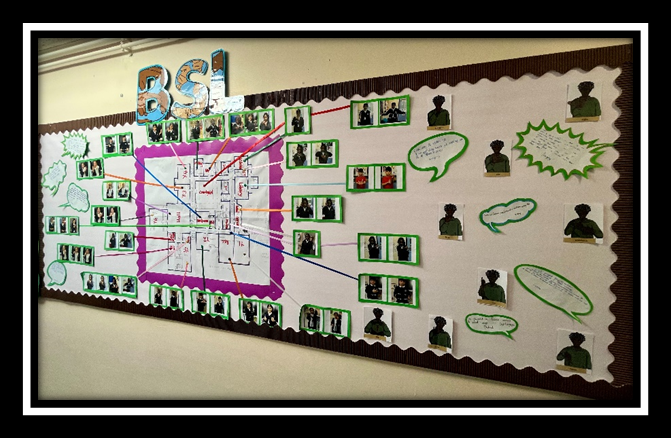 Our whole school BSL Board
BSL
The specialised staff in our HS-ARP all have relevant BSL qualifications and experience in signing. We encourage all ARP pupils to learn BSL, and they have access to weekly one-to-one BSL lessons with a Deaf tutor. We have links with BSL tutors to enable families to learn sign language together at home and connect with places such as Young Deaf Activities (YDA), a charity which supports families with deaf children.
If appropriate, pupils can work towards gaining a sign language qualification such as BSL Level 1 towards the end of their primary schooling with us. Our school promotes and nurtures the use of BSL in every class.
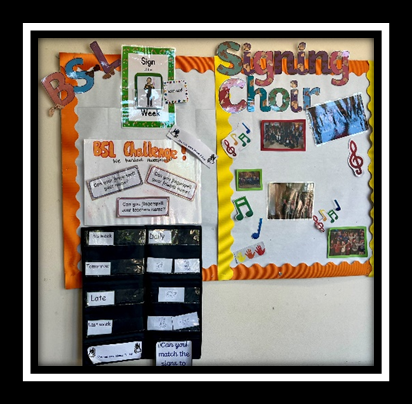 Our weekly signing challenge board and Signing Choir board
SMCS Signing Choir
A popular lunchtime signing choir club is offered to every child in school, with younger years joining us more in the summer term. The choir performs at events such as Christingle, school fayres and outside school events during the year.
Assemblies, concerts, performances and other whole school events are signed for equal access for all. We use a portable sound field system on a tripod for all assemblies linked to the Radio Aids. Signed songs are also taught by the ARP team and then used at the start of every assembly.
Visual Phonics
Visual Phonics is used as a visual aid to spoken English to enable deaf pupils to understand and identify all the speech sounds. It also clarifies how and where speech sounds are produced. Visual Phonics is a tool to support pupils' learning of phonics. All pupils in the school are taught Visual Phonics from Reception to complement their daily phonics learning.
The ARP Team
Our deaf pupils are fully included in school life. They are supported in class by an experienced team of specialist teaching assistants in order to facilitate access to the curriculum. A Qualified Teacher of the Deaf also supports the pupils, either in class or delivering 1:1 and small group teaching within the HS-ARP. We work closely with a specialist (Deafness) Speech & Language Therapist who provides speech and language therapy twice a week.
The Qualified Teacher of the Deaf will carry out assessments with pupils to ensure that the specific needs of each pupil are identified and that the provision is appropriate. Provision of the pupils is monitored regularly to ensure that it is impactful. The Teacher of the Deaf and Specialist Teaching Assistants carry out pre-and post-teaching of subject content or new vocabulary, and deliver specific interventions according to the needs of the pupil. All sessions are either on a one-to-one basis or in small groups. Specialist Teaching Assistants support deaf children in the classroom in all language-based subjects, such as English, Maths, Science and Topic.
Our Wider Team supporting ARP
A dedicated Speech and Language Therapist with a specialism in deafness visits the HS-ARP weekly. Currently, all the ARP children are seen twice a week for short individual or paired sessions to work on the development of language skills and specific aspects of speech as outlined in their EHCP. The Teacher of the Deaf and the Speech Therapist work closely together to plan and review targets and the programmes of work.
Deaf Peer Group Sessions
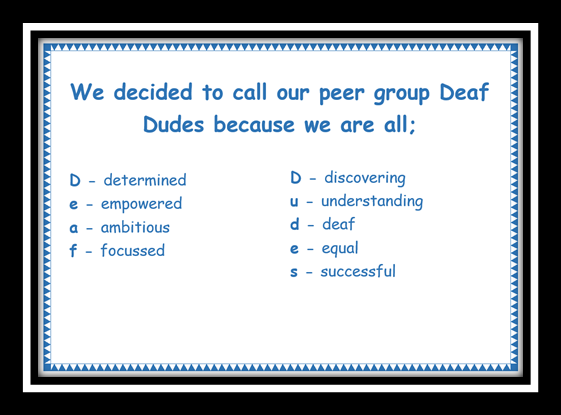
The children and staff working in our ARP all join together for a deaf peer group session on a bi-weekly basis. The peer group is currently named ‘Deaf Dudes’ by the children. This session aims to boost the children’s personal understanding of deafness, raise their awareness of deafness in the wider world and to develop skills such as communication (in various forms) and language as well as empathy, teamwork and life skills. The sessions are planned by the ARP staff and heavily influenced by the children’s interests and questions. The planning is also supported by the Iowa Extended Core Curriculum, which focusses on 8 specific areas of need for deaf children, which encompasses a range of specialised needs not covered in the general education curriculum, such as: Audiology, Career Education, Communication, Family Education, Functional Skills for Educational Success, Self Determination and Advocacy, Social and Emotional Skills and Technology.
Deaf Awareness
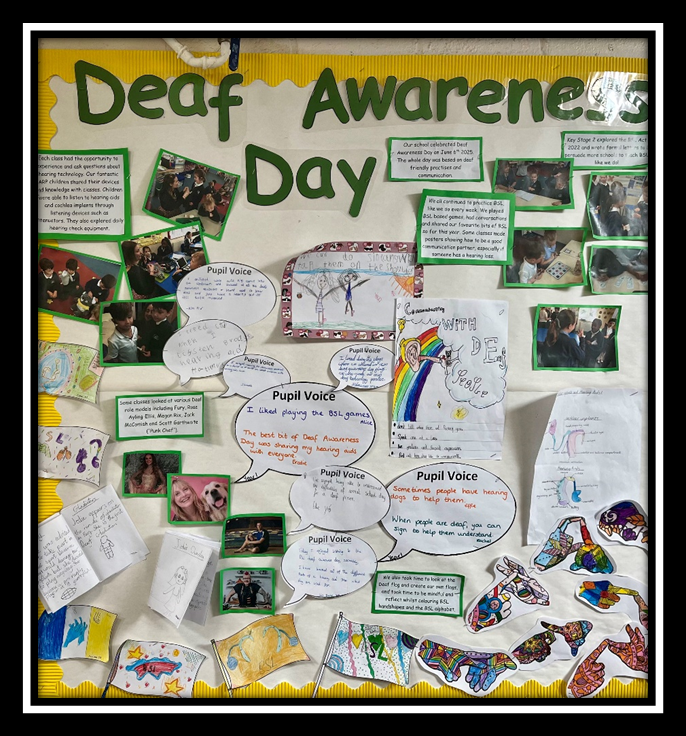
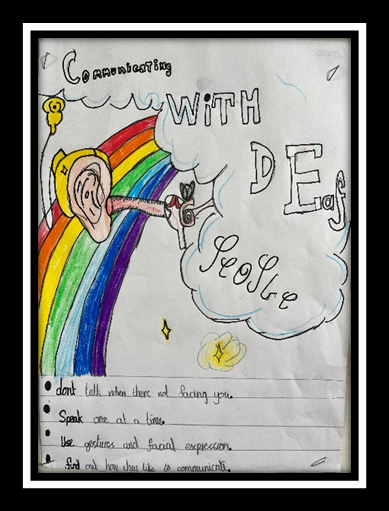
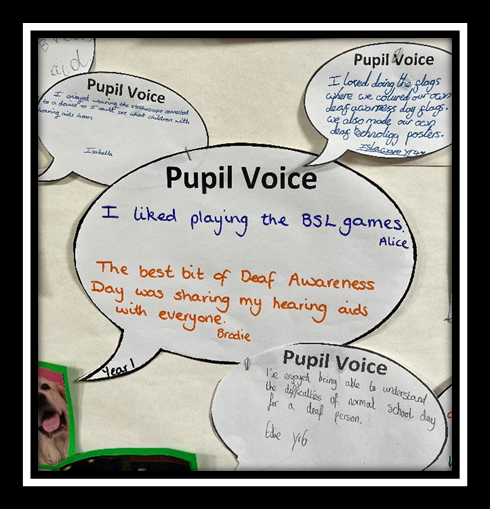
The Teacher of the Deaf ensures that all staff are trained in deaf-friendly teaching strategies and the use of equipment that improves the listening environment for deaf pupils. They also ensure that all members of the school community have up-to-date Deaf Awareness training, so deaf pupils are fully included in all aspects of school life. An annual Deaf Awareness Day is held in school to promote communication and inclusion, which is greatly enjoyed by everyone!
Meet the ARP team:

Mrs Atkinson
Trainee Teacher of the Deaf
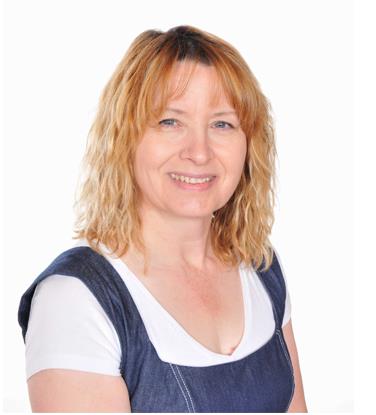
Mrs Walker
Specialist (Deafness) Teaching Assistant

Miss Bracken
Specialist (Deafness) Teaching Assistant
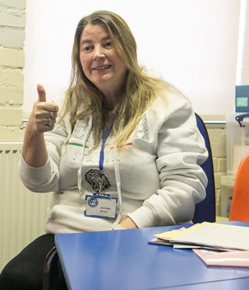
Hilary Stoneley
Specialist Speech & Language Therapist (Deafness)
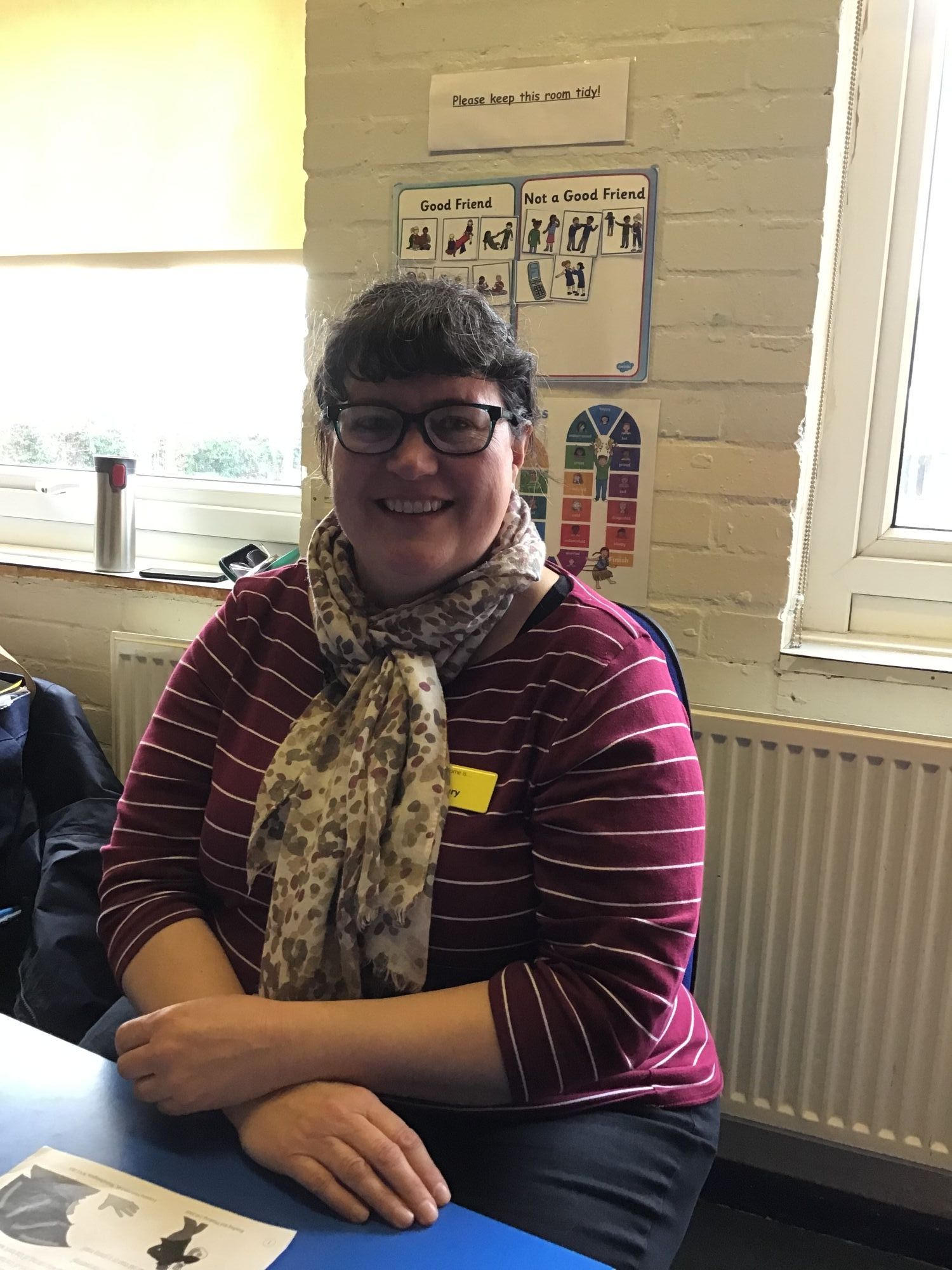
Mary Fallon
Deaf BSL Tutor
Transition
We invest time in ensuring smooth transitions for our deaf pupils. From first starting at school with us, to transferring onto their next school, and even as the pupils move classes each year.
A programme of visits, together with liaison between staff, ensures a smooth transfer and the opportunity to allay worries that pupils and families may have. Close liaison and collaboration with schools enables our pupils to follow the pathway with smooth transitions between phases. If your child is due to join our setting, the ToD will endeavour to meet them in their current setting.
Home Communication and Monitoring Progress with Families
Once a term, a Multi-Agency Provision Plan (MAPP) is drawn up with individual targets based on the pupil’s EHCP. Targets are reviewed half-termly or termly, as appropriate. HS-ARP pupils have an Annual Review each year with all professionals concerned with the EHCP for the pupil to review progress and monitor outcomes. Parents are encouraged to meet with the ToD to discuss these targets and plans. Communication between parents and the ARP team is highly valued to ensure pupils are making continual progress.
Parents attend school parent consultation meetings held twice a year and also receive a yearly school report showing their child’s progress and development. The ToD joins the class teachers at these meetings to ensure clear communication and support.
The HS-ARP uses a Home School Communication book as a link between home and school for day-to-day informal messages. Parents can also contact the school office at any point if they wish to speak to the Teacher of the Deaf about their child or have any worries or concerns.
If you would like more information about the HS-ARP at SMCS, please do not hesitate to get in touch and ask for Mrs Atkinson. You are always welcome to visit the school for a pre-booked tour and chat. We look forward to meeting you and your child!
Email: office@smcs.org.uk
Telephone: 01296 612371